Sunday, January 31, 2010
G block vocab: Words 65-75
Please post the word, the part of speech and the definition that is in line with that of the book. That means you should look at the word IN the book and find the single, solitary, only definition that works in the sentence from the book. And don't forget to include your name.


F block Vocab: Words 65-75
Please post the word, the part of speech and the definition that is in line with that of the book. That means you should look at the word IN the book and find the single, solitary, only definition that works in the sentence from the book. And don't forget to include your name.
Thursday, January 28, 2010
In-class writing 1.29.10
In a well thought our response, please address one of the following questions. You are allowed to review the questions as posted on Tsotsi Day 4 and Tsotsi Day 5.
Question #1: In what ways has Fugard created Morris as a parallel to Tsotsi? In other words, how is Morris similar to Tsotsi, and why is that significant?
Question #2: What is the SYMBOLIC significance of Tsotsi’s “talisman” shift from the knife to the baby? In what ways does this shift change Tsotsi and how we, the reader, know know and understand him?
Your response must include
1. Introduction
2. At least ONE body paragraph
3. Please bold or underline your thesis statement.
A good introduction should include
1. A “hook” that engages your reader – some sort of provocative quotation or question or claim
2. The name and author of the work you are discussing
3. A brief description of whatever basic information—about the text, the author, and/or the topic—readers will need to follow the argument
4. A clear, specific, and arguable thesis statement
5. A blueprint phrase or sentence that explains how you will go about proving your argument (i.e. a suggestion of how your essay will be organized)
Question #1: In what ways has Fugard created Morris as a parallel to Tsotsi? In other words, how is Morris similar to Tsotsi, and why is that significant?
Question #2: What is the SYMBOLIC significance of Tsotsi’s “talisman” shift from the knife to the baby? In what ways does this shift change Tsotsi and how we, the reader, know know and understand him?
Your response must include
1. Introduction
2. At least ONE body paragraph
3. Please bold or underline your thesis statement.
A good introduction should include
1. A “hook” that engages your reader – some sort of provocative quotation or question or claim
2. The name and author of the work you are discussing
3. A brief description of whatever basic information—about the text, the author, and/or the topic—readers will need to follow the argument
4. A clear, specific, and arguable thesis statement
5. A blueprint phrase or sentence that explains how you will go about proving your argument (i.e. a suggestion of how your essay will be organized)
SPA: Writing an Effective Analytical Paragraph, by Eugenie Chan
- Topic Sentence: The paragraph’s thesis.
- Transition: Guide your reader to your first idea.
- First Main Idea: Supports your thesis.
- Context: Introduces quote or summary sentence or phrase that indicates the situation from which the quote was taken.
- Evidence: The quote or paraphrase (with author and page number in parentheses at the end of the quote).
- Analysis: Interpret the quote. State why this quote proves the topic sentence. Get to the so what.
- Transition: Provide another guide or link to second idea.
- Second Main Idea
- Context for second quote.
- Second quote or paraphrase.
- Analysis of second quote.
- Commentary: Relate topic back to larger thesis of paper. Think thematic connections to the text as a whole.


Wednesday, January 27, 2010


Tuesday, January 26, 2010


Monday, January 25, 2010
Tsotsi Day 5
Review Vocabulary
Writing Topic #2
1. Let's look at the second catalyst for Tsotsi's transformation: Morris Tshabalala. Tsotsi's encounter with Morris has a profound effect on Tsotsi, and it's important to figure out why and how Fugard creates the significance. Reread the following passage describing Morris's life and mindset. In a clear and thoughtful response address:
Use the close reading guidelines and write a thesis with your group. We will workshop the thesis statements and then, if time permits, move to crafting an introduction to this question.
A good introduction should include:
1. A “hook” that engages your reader – some sort of provocative quotation or question or claim
2. The name and author of the work you are discussing
3. A brief description of whatever basic information—about the text, the author, and/or the topic—readers will need to follow the argument
4. A clear, specific, and arguable thesis statement
5. A blueprint phrase or sentence that explains how you will go about proving your argument (i.e. a suggestion of how your essay will be organized)
Here’s a model introduction paragraph — thanks Nicole!
Herman Melville and Fyodor Dostoevsky, both writing in the nineteenth century, explored in their fiction the nature of man. Melville, in his story, “Bartelby the Scrivener,” and Dostoevsky, in his prose manifesto, “Notes from the Underground,” focus on two very different “modern men” who were unhappy with their lives. Although Bartelby and the Underground Man are both alienated from their society, they suffer their alienation in radically different ways: Bartelby gradually withdraws from all human contact in an attempt to fade into the background of life, while the Underground Man rages against the world because he feels he has already faded out of existence.
For Friday's In-class Writing
1. You will be offered the choice of writing about either Monday's question or Wednesday's question.
2. You will be asked to write an introductory paragraph and at least one body paragraph.
3. You will be allowed to come to class with the following:
5. Your vocab quiz will contain only fifteen words. What fifteen words? You'll have to wait and see.
Writing Topic #2
1. Let's look at the second catalyst for Tsotsi's transformation: Morris Tshabalala. Tsotsi's encounter with Morris has a profound effect on Tsotsi, and it's important to figure out why and how Fugard creates the significance. Reread the following passage describing Morris's life and mindset. In a clear and thoughtful response address:
In what ways has Fugard created Morris as a parallel to Tsotsi? In other words, how is Morris similar to Tsotsi, and why is that significant?
"He was halfway down the street when he stopped to rest. He examined his hands first, feeling one with the other, and the parts where his blackened nails made a hard, rasping sound on the calluses of too much work, feeling nothing in either. The silence was sweet, melting like butter on his sore thoughts. There were no reminders of the past or mirrors of the present. He looked back the way he had come ... From time to time the dust and litter rose and turned balletically before falling back like the last survivors of an orgy. It had been a busy day," (Fugard 78-80).Passage
Use the close reading guidelines and write a thesis with your group. We will workshop the thesis statements and then, if time permits, move to crafting an introduction to this question.
A good introduction should include:
1. A “hook” that engages your reader – some sort of provocative quotation or question or claim
2. The name and author of the work you are discussing
3. A brief description of whatever basic information—about the text, the author, and/or the topic—readers will need to follow the argument
4. A clear, specific, and arguable thesis statement
5. A blueprint phrase or sentence that explains how you will go about proving your argument (i.e. a suggestion of how your essay will be organized)
Here’s a model introduction paragraph — thanks Nicole!
Herman Melville and Fyodor Dostoevsky, both writing in the nineteenth century, explored in their fiction the nature of man. Melville, in his story, “Bartelby the Scrivener,” and Dostoevsky, in his prose manifesto, “Notes from the Underground,” focus on two very different “modern men” who were unhappy with their lives. Although Bartelby and the Underground Man are both alienated from their society, they suffer their alienation in radically different ways: Bartelby gradually withdraws from all human contact in an attempt to fade into the background of life, while the Underground Man rages against the world because he feels he has already faded out of existence.
For Friday's In-class Writing
1. You will be offered the choice of writing about either Monday's question or Wednesday's question.
2. You will be asked to write an introductory paragraph and at least one body paragraph.
3. You will be allowed to come to class with the following:
- No more than ONE sheet of paper, Times 12 point font, double spaced. Notes must be in hard copy form. Electronic versions will NOT be accepted.
- A prepared thesis statement
- Evidence for your argument
5. Your vocab quiz will contain only fifteen words. What fifteen words? You'll have to wait and see.
G block: Vocab words 51-64
Please post the word, the part of speech and the definition that is in line with that of the book. That means you should look at the word IN the book and find the single, solitary, only definition that works in the sentence from the book. And don't forget to include your name.
F block: Vocab words 51-64
Please post the word, the part of speech and the definition that is in line with that of the book. That means you should look at the word IN the book and find the single, solitary, only definition that works in the sentence from the book. And don't forget to include your name.
Sunday, January 24, 2010
Tsotsi Day 4
Review Vocabulary
From prior class
2. The Talisman
From prior class
2. The Talisman
- When we first meet Tsotsi, he has three hard and fast rules: “The first was the rule of working in the moment” (35), specifically seeing and working with his knife. We learn that “he, Tsotsi, knew himself and his dark purpose, and everything was all right. The knife was not only his weapon, but also a fetish, a talisman that conjured away bad spirits and established him securely in his life” (36). Yet, strangely, after being “given” the baby, Tsotsi remarkably takes the baby as his new “talisman”(59).
- Big question: What is the SYMBOLIC significance of Tsotsi’s “talisman” shift from the knife to the baby? In what ways does this shift change Tsotsi and how we, the reader, know know and understand him?
- Working in groups, I'd like you to come up with a thesis statement and evidence to support your claim. We will then share thesis statements and discuss the topic more completely as a class.
F block: Words 47-50
Sorry this was late ...
Please post the word, the part of speech and the definition that is in line with that of the book. That means you should look at the word IN the book and find the single, solitary, only definition that works in the sentence from the book. And don't forget to include your name.
Please post the word, the part of speech and the definition that is in line with that of the book. That means you should look at the word IN the book and find the single, solitary, only definition that works in the sentence from the book. And don't forget to include your name.
G block: Words 47-50
Sorry this was late ...
Please post the word, the part of speech and the definition that is in line with that of the book. That means you should look at the word IN the book and find the single, solitary, only definition that works in the sentence from the book. And don't forget to include your name.
Please post the word, the part of speech and the definition that is in line with that of the book. That means you should look at the word IN the book and find the single, solitary, only definition that works in the sentence from the book. And don't forget to include your name.
Tuesday, January 19, 2010
Tsotsi Day 3
Review Vocabulary
From prior class
4. Using pages 34-41, look for passages that relate to Tsotsi's identity. How does Tsotsi identify himself? What is meaningful to him? Who does he see himself as? How does he see himself in relation to the world?
5. Let's talk briefly about the woman who gives away the baby. What do we know about her?
From last night's reading
1. Who is David?
2. The Talisman
From prior class
4. Using pages 34-41, look for passages that relate to Tsotsi's identity. How does Tsotsi identify himself? What is meaningful to him? Who does he see himself as? How does he see himself in relation to the world?
5. Let's talk briefly about the woman who gives away the baby. What do we know about her?
From last night's reading
1. Who is David?
- The second king of Israel
- ancestor, forerunner, and foreshadower of Jesus Christ
- Killed the Philistine champion Goliath.
- Spread his influence more widely than previous king.
- Brought the arc of the covenant (vessel for 10 commandments) to a special tabernacle in Jerusalem, therefore laying the foundations for the later significance of the city
- But big sin: committed adultery with Bathsheba and arranged to have her husband (Uriah) killed. He repented, but was later used as an example of how sin spoils God's will.
- Son Absalom died in a bloody rebellion. The family bloodline was tainted because of David's adultery, and ran long after his death.
- Jews saw in David the kingly ideal of the image in which they looked for the coming Messiah, who did appear in David's family tree.
Symbol: anything that stands for or represents something else BEYOND it.
--Oxford Dictionary of Literary Terms
2. The Talisman
- When we first meet Tsotsi, he has three hard and fast rules: “The first was the rule of working in the moment” (35), specifically seeing and working with his knife. We learn that “he, Tsotsi, knew himself and his dark purpose, and everything was all right. The knife was not only his weapon, but also a fetish, a talisman that conjured away bad spirits and established him securely in his life” (36). Yet, strangely, after being “given” the baby, Tsotsi remarkably takes the baby as his new “talisman”(59).
- Big question: What is the SYMBOLIC significance of Tsotsi’s “talisman” shift from the knife to the baby? In what ways does this shift change Tsotsi and how we, the reader, know know and understand him?
- Working in groups, I'd like you to come up with a thesis statement and evidence to support your claim. We will then share thesis statements and discuss the topic more completely as a class.
F block: Vocab words 38-46
Please post the word, the part of speech and the definition that is in line with that of the book. That means you should look at the word IN the book and find the single, solitary, only definition that works in the sentence from the book. And don't forget to include your name.
G Block: Vocab Words 38-46
Please post the word, the part of speech and the definition that is in line with that of the book. That means you should look at the word IN the book and find the single, solitary, only definition that works in the sentence from the book. And don't forget to include your name.
Writing about re-reading
Overarching question to keep in mind:
How do you as a reader bring a different self to a body of work at different times in your life?
How do you as a reader bring a different self to a body of work at different times in your life?
For this in-class writing, I ask you to address all of the following questions in a well thought out paragraph or two. Please do not simply answer the questions one after another. The questions posed are meant to build on one another so you think deeply about not only who you were when you first experienced your novel but also what the novel meant to you.
I suggest you do some brainstorming before you start writing. Maybe answer each of the questions and then see how you can weave those answer into a cohesive and comprehensive response. This is NOT a SPA structured writing. This is personal writing. You can use I, you can be more casual, but you still want to have a solid structure and purpose.
The Facts
- Title & author of the book.
- How old were you when you previously read this book?
- Where were you when you read this book?
- What time of year did you read this?
- Did you read this book for pleasure or for school? If for school, what grade and what teacher assigned it? If for pleasure, who suggested you read it?
- What was going on in your life while you were reading this book?
- Have you ever recommended this book to anyone else?
- Have you ever shared your passion for this book with anyone else?
The impressions
- What made you choose to re-read this book?
- What is your dominant impression/strongest memory from when you last read this book?
- How have you changed since the last time you read this book?
- Do you expect the book to be different? better? worse? more/less interesting?
- What impressions of the book do you hope remain the same?
- What impressions of the book might change?
Wednesday, January 13, 2010
Tsotsi: Day 2
Review vocabulary
From prior class
3. Gumboot Dhlamini: How does Fugard develop Gumboot's story? Why does Fugard develop his story so completely?
From last night's reading
1. Form analysis: what effect does the repetition of "You could drink" have on the tone of the opening of chapter 2? What is Fugard trying to tell us about the culture of the township?
2. Close reading at p.20, paragraph beginning: "Tsotsi hated the questions for a profound but simple reason. ... He was as old as tht moment, and his name was the name, in a way, of all men."
3. Close reading at p. 31, bottom paragraph ("He didn't stop again until ... "), through p. 33, top two lines (... as distant echoes of those around them.")
4. Look for passages that relate to Tsotsi's identity. How does Tsotsi identify himself? What is meaningful to him? Who does he see himself as?
From prior class
3. Gumboot Dhlamini: How does Fugard develop Gumboot's story? Why does Fugard develop his story so completely?
From last night's reading
1. Form analysis: what effect does the repetition of "You could drink" have on the tone of the opening of chapter 2? What is Fugard trying to tell us about the culture of the township?
2. Close reading at p.20, paragraph beginning: "Tsotsi hated the questions for a profound but simple reason. ... He was as old as tht moment, and his name was the name, in a way, of all men."
3. Close reading at p. 31, bottom paragraph ("He didn't stop again until ... "), through p. 33, top two lines (... as distant echoes of those around them.")
4. Look for passages that relate to Tsotsi's identity. How does Tsotsi identify himself? What is meaningful to him? Who does he see himself as?
Tuesday, January 12, 2010
Monday, January 11, 2010
Tsotsi Day 1
Review vocabulary.
Important info from the intro:
South Africa
1. 1913 Land Act appropriated 77% of the country for white use
2. 1948: white voters elected the Afrikaner Nationalist Party, which employed apartheid practices.
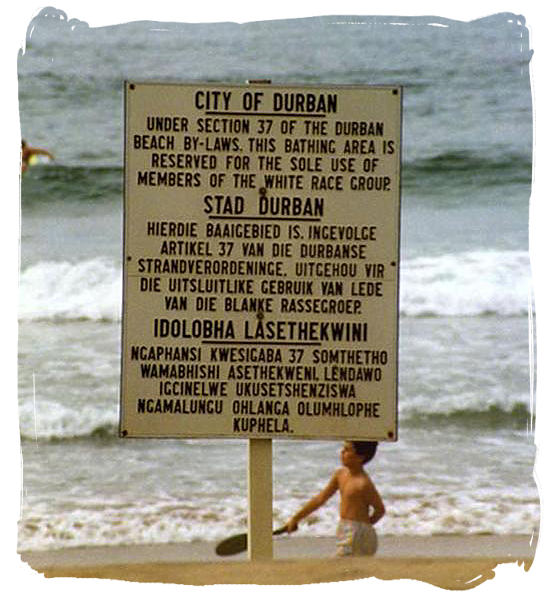
3. Apartheid (pic 1, 2, 3, 4, 5) restricted the movement, work, rights of the black majority. Apartheid lasted until 1991 when Nelson Mandela was elected president of the ANC: African National Congress.
Fugard/Tsotsi
1. Theme central to his work: "the struggle of people trapped in bonds of family, love or dependency, oppressed by systems to which they lack the keys of analysis or insight."
2. Idea central to his work: "The effect of its (apartheid) regime of humiliation, he suggested, was to abort hope and drive the persecuted to turn on those lower down the survival chain."
3. Where identity comes in: ... yet Tsotsi knows nothing of himself, not name nor age nor origins. Shorn of history, he has no identity, and when he thinks of himself he thinks of darkness. How does one reach an accommodation with such an entity? Initially Fugard implies that it cannot be done; his character appears to have no point of human access, like the malevolent system that created him."
Points for Discussion
1. Compare the descriptive language used to introduce Tsotsi, Boston, Die Aap, and Butcher. How do the descriptions differ? What are we to think of this gang of males? How do these males symbolize pieces of the South African society?
2. Close reading of passage on bottom of p.6 to top of p.7. How does this balance with the descriptions with the males?
3. Gumboot Dhlamini: How does Fugard develop Gumboot's story? Why does Fugard develop his story so completely?
Important info from the intro:
South Africa
1. 1913 Land Act appropriated 77% of the country for white use
2. 1948: white voters elected the Afrikaner Nationalist Party, which employed apartheid practices.
3. Apartheid (pic 1, 2, 3, 4, 5) restricted the movement, work, rights of the black majority. Apartheid lasted until 1991 when Nelson Mandela was elected president of the ANC: African National Congress.




Fugard/Tsotsi
1. Theme central to his work: "the struggle of people trapped in bonds of family, love or dependency, oppressed by systems to which they lack the keys of analysis or insight."
2. Idea central to his work: "The effect of its (apartheid) regime of humiliation, he suggested, was to abort hope and drive the persecuted to turn on those lower down the survival chain."
3. Where identity comes in: ... yet Tsotsi knows nothing of himself, not name nor age nor origins. Shorn of history, he has no identity, and when he thinks of himself he thinks of darkness. How does one reach an accommodation with such an entity? Initially Fugard implies that it cannot be done; his character appears to have no point of human access, like the malevolent system that created him."
Points for Discussion
1. Compare the descriptive language used to introduce Tsotsi, Boston, Die Aap, and Butcher. How do the descriptions differ? What are we to think of this gang of males? How do these males symbolize pieces of the South African society?
2. Close reading of passage on bottom of p.6 to top of p.7. How does this balance with the descriptions with the males?
3. Gumboot Dhlamini: How does Fugard develop Gumboot's story? Why does Fugard develop his story so completely?
Sunday, January 10, 2010
Friday, January 8, 2010
Thursday, January 7, 2010
Welcome Second Semester!
1. Let's talk about re-reading some books.
2. Now, let's move on to Tsotsi .... who? But first some terms to discuss: conflict, negotiation, forgiveness. What do these words mean in society? What do they mean in terms of our identity?
2. Now, let's move on to Tsotsi .... who? But first some terms to discuss: conflict, negotiation, forgiveness. What do these words mean in society? What do they mean in terms of our identity?
Subscribe to:
Posts (Atom)