Review vocabulary
From prior class
3. Gumboot Dhlamini: How does Fugard develop Gumboot's story? Why does Fugard develop his story so completely?
From last night's reading
1. Form analysis: what effect does the repetition of "You could drink" have on the tone of the opening of chapter 2? What is Fugard trying to tell us about the culture of the township?
2. Close reading at p.20, paragraph beginning: "Tsotsi hated the questions for a profound but simple reason. ... He was as old as tht moment, and his name was the name, in a way, of all men."
3. Close reading at p. 31, bottom paragraph ("He didn't stop again until ... "), through p. 33, top two lines (... as distant echoes of those around them.")
4. Look for passages that relate to Tsotsi's identity. How does Tsotsi identify himself? What is meaningful to him? Who does he see himself as?
Wednesday, January 13, 2010


Tuesday, January 12, 2010
Monday, January 11, 2010
Tsotsi Day 1
Review vocabulary.
Important info from the intro:
South Africa
1. 1913 Land Act appropriated 77% of the country for white use
2. 1948: white voters elected the Afrikaner Nationalist Party, which employed apartheid practices.
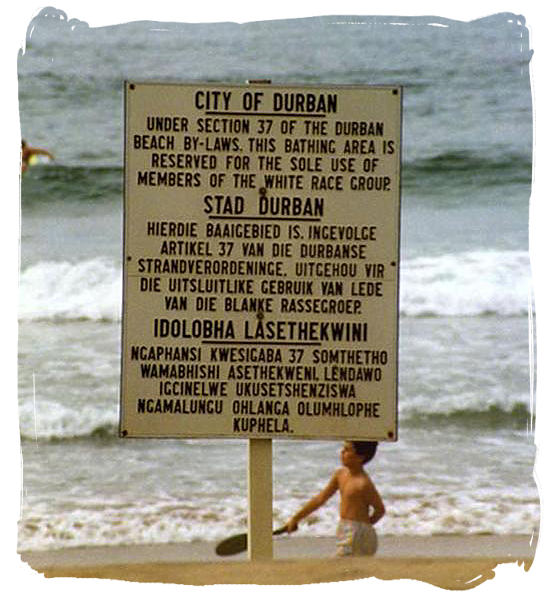
3. Apartheid (pic 1, 2, 3, 4, 5) restricted the movement, work, rights of the black majority. Apartheid lasted until 1991 when Nelson Mandela was elected president of the ANC: African National Congress.
Fugard/Tsotsi
1. Theme central to his work: "the struggle of people trapped in bonds of family, love or dependency, oppressed by systems to which they lack the keys of analysis or insight."
2. Idea central to his work: "The effect of its (apartheid) regime of humiliation, he suggested, was to abort hope and drive the persecuted to turn on those lower down the survival chain."
3. Where identity comes in: ... yet Tsotsi knows nothing of himself, not name nor age nor origins. Shorn of history, he has no identity, and when he thinks of himself he thinks of darkness. How does one reach an accommodation with such an entity? Initially Fugard implies that it cannot be done; his character appears to have no point of human access, like the malevolent system that created him."
Points for Discussion
1. Compare the descriptive language used to introduce Tsotsi, Boston, Die Aap, and Butcher. How do the descriptions differ? What are we to think of this gang of males? How do these males symbolize pieces of the South African society?
2. Close reading of passage on bottom of p.6 to top of p.7. How does this balance with the descriptions with the males?
3. Gumboot Dhlamini: How does Fugard develop Gumboot's story? Why does Fugard develop his story so completely?
Important info from the intro:
South Africa
1. 1913 Land Act appropriated 77% of the country for white use
2. 1948: white voters elected the Afrikaner Nationalist Party, which employed apartheid practices.
3. Apartheid (pic 1, 2, 3, 4, 5) restricted the movement, work, rights of the black majority. Apartheid lasted until 1991 when Nelson Mandela was elected president of the ANC: African National Congress.




Fugard/Tsotsi
1. Theme central to his work: "the struggle of people trapped in bonds of family, love or dependency, oppressed by systems to which they lack the keys of analysis or insight."
2. Idea central to his work: "The effect of its (apartheid) regime of humiliation, he suggested, was to abort hope and drive the persecuted to turn on those lower down the survival chain."
3. Where identity comes in: ... yet Tsotsi knows nothing of himself, not name nor age nor origins. Shorn of history, he has no identity, and when he thinks of himself he thinks of darkness. How does one reach an accommodation with such an entity? Initially Fugard implies that it cannot be done; his character appears to have no point of human access, like the malevolent system that created him."
Points for Discussion
1. Compare the descriptive language used to introduce Tsotsi, Boston, Die Aap, and Butcher. How do the descriptions differ? What are we to think of this gang of males? How do these males symbolize pieces of the South African society?
2. Close reading of passage on bottom of p.6 to top of p.7. How does this balance with the descriptions with the males?
3. Gumboot Dhlamini: How does Fugard develop Gumboot's story? Why does Fugard develop his story so completely?
Sunday, January 10, 2010
Friday, January 8, 2010
Thursday, January 7, 2010
Welcome Second Semester!
1. Let's talk about re-reading some books.
2. Now, let's move on to Tsotsi .... who? But first some terms to discuss: conflict, negotiation, forgiveness. What do these words mean in society? What do they mean in terms of our identity?
2. Now, let's move on to Tsotsi .... who? But first some terms to discuss: conflict, negotiation, forgiveness. What do these words mean in society? What do they mean in terms of our identity?
Subscribe to:
Posts (Atom)