Monday, December 14, 2009

Exam Essay Review

F block

G block

Some reminders:
  • Have a solid thesis for each essay question.
  • Prepare evidence that might work for two or more questions.
  • Use the thesis handout to perfect and refine your thesis BEFORE the exam.
  • The 1-page sheet must be double spaced, 1" margins, 12 pt size type — no exceptions.

Good luck! Relax. You'll be amazing. Get some good sleep this week. Stay hydrated. Eat well.

Friday, December 11, 2009

Review Homework

On Friday's class, we worked on preparing a review sheet for all of the short stories and novels we've read.

Here are the review sheets: F block & G block. You are more than welcome to look at and use both.

For Monday's class, please start crafting your thesis statements for the essay portion of the exam. We will go over the different essential questions and the exam essay.

Wednesday, December 9, 2009

Exam review material

Here it is!

We will go over this sheet on Friday and Monday.

Please make sure you bring your reader, Night, and Things Fall Apart to class on Friday and Monday.

Friday, November 27, 2009

Letter Writing Fun!

Letter Writing Assignment

Let's get into character

Letter examples 1, Farewell, last letter, looting Crystal Night, Saving Jews,

Date

In English Class

Homework

Tues. 12/1

Introduce letter writing project

Read some letters

Character Bio


Begin writing letter. It is DUE at the end of Thursday's class.

Thurs. 12/3

COMPUTER LAB


Letter due at end of class

Create a list of 12-15 major characters we've encountered this semester. Be sure to note what story/novel each character was in and why each character is important.

Mon. 12/7

Film: Life is Beautiful

Create a list of 8-10 major themes we've encountered this semester. Be sure each theme is linked to a story/novel.

Wed. 12/9

Film: Life is Beautiful

Begin prep for final exams

Tuesday, November 24, 2009

Night ends

Free write
Identity. Memory. Witness. Messenger. What do these words mean in the context of Night?

Discussion
1. How do the prisoners struggle to maintain their identity under extraordinary conditions?
2. Eliezer recalls the story of three fathers and three sons. Why? How do these stories affect the way he reacts to his father's illness? To his father's death?
3. Why is it important to Eliezer to remember? To tell you his story? Look at the last two lines.

Bearing Witness NYT

Wins Nobel NYT

'Has Germany ever asked us to forgive? To my knowledge, no such plea was ever made. With whom am I to speak about forgiveness? I, who don't believe in collective guilt. Who am I to believe in collective innocence?' Elie Wiesel; chairman of the United States Holocaust Memorial Council, during his first vist to Germany since his release almost 40 years ago from the Buchenwald concentration camp. January 26, 1986.

Sunday, November 22, 2009

Night marches on

Free-write: The committee that created the United States Holocaust Memorial Museum in Washington, D.C. is erecting two new monuments, and you have been asked to select one quotation from Night for the monument that represents Auschwitz-Birkenau. What quotation would you select? I ask you not only to identify the quotation you would use, but also explain why you chose it.

General questions:
1. The reader experiences Wiesel's anger not at the Germans but at his faith. What does this anger suggest about the depths of his faith? How have the experiences at Auschwitz affect his faith?
2. How has Wiesel's relationship with his father changed? What has each come to represent to the other?
3. The choiceless choice: do Wiesel and his father make the right choice in leaving the infirmary? How does the decision help us understand why many survivors attribute their survival to luck? Wiesel clearly knows the fate of the infirmary patients. Would you want to know this kind of information after making such a difficult decision?
4. Biblical references: Job, Last judgment, Adam & Eve, Noah, Sodom.

How the memoir is crafted:
1. Why do you think Elie Wiesel tells this story in the first person perspective? If Night were written in the third person, would it be more or less believable.
2. Night is written in short, simple sentences. Critics call this kind of writing "controlled." Every word has been carefully chosen for precise meaning. How does this style of writing compare with Wiesel's experiences in the concentration camps?

Videos:
1. Elie Wiesel at Buchenwald, 6/09
2. Twins story of survival
3. Auschwitz Album
4. Young girl's story of survival

Wednesday, November 18, 2009

Night continues

Free write: You have been asked to write Elie Weisel a letter. What questions would you ask him about the book so far or about the violence and hatred he describes. What would you want him to know about you as a person? Remember, a letter begins with a greeting (Dear, To whom it may concern) and ends with a formal closing (sincerely, yours truly, all the best). We'll spend about 15 minutes writing.

A closer look
p. 29 — final moment with mother. How does Weisel express regret in this moment? How does this moment redefine his relationship with his father? How does this moment redefine Elie's identity?

p. 33 — walking to possible death. What does this moment reveal about Elie's self? What does it tell the reader about his beliefs?

p. 65 — That night, the soup tasted of corpses. What has changed in Elie? How does he see himself in society differently now?

Photos & text
"Men to the left. Women to the right," (29). Interior gas chamber.

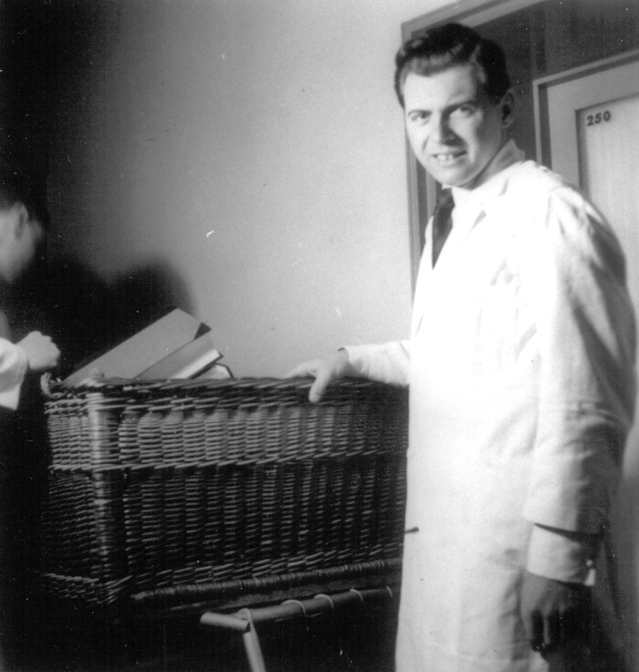
"My heart was about to burst. There. I was face-to-face with the Angel of Death," (34). Dr. Mengele was stationed in Auschwitz in early 1941. He judged the fate of many people, but his real passion was for twins. He felt her could learn about genetics if he studied (tortured) one twin. He documented much of his work with photographs.

"He had been forced to place his own father's body into the furnace," (35). corpses. This is a disturbing image.

"Our clothes were to be thrown on the floor at the back of the barrack. There was a pile there already. New suits, old ones, torn overcoats, rags," (35)

"Their clippers tore out our hair, shaved every hair on our bodies," (35).

"Work or crematorium—the choice is yours," (39). Ovens.

Rings, silverware taken by the nazis. Women's barracks, empty barracks, bunks at liberation.

"At six o-clock in the afternoon: roll call," (43).

"As we were passing through some of the villages, many Germans watched us, showing no surprise. No doubt they have seen quite a few of these processions ... " (46). Truck full. This is a disturbing image.

"We struck up a conversation with our neighbors, the musicians. Almost all of them were Jews. Juliek, a Pole with eyeglasses and a cynical smile in a pale face, " (49).

"My father had never served in the military and could not march in step. But here, whenever we moved from one place to another, it was in step," (55).

"Ten thousand caps came off at once," (61).

"Then came the march past the victims," (64). The latter picture is disturbing.

Tuesday, November 17, 2009

Night falls

Identity. Memory. Witness. Messenger.
  • These are the key concepts to keep in mind while reading Night.

Free write: You are either 1. a member of Eliezer's family (mom, dad, sisters), 2. Moishe the Beadle, 3. other Jews in Sighet, or 4. the Germans. How would you describe Eliezer?

What shapes Eliezer's identity (find specific passages for each question)
1. How does Eliezer identify himself?
2. What role does Moishe the Beadle play in his life?
3. How important is religion to the way Eliezer defines his life?

Knowing, madness and belief
1. Compare Moishe the Beadle to Madame Schachter. Are they mad? prophets? witnesses?

How the story is told
1. Why do you think Elie Wiesel begins Night with the story of Moishe the Beadle?
2. What lessons does the narrator seem to learn from Moishe's experience in telling his own story?
3. What do you think Elie Wiesel tells this story in the first person perspective? If Night were written in the third person, would it be more or less believable.
4. The word night is a key word in this first section (the entire book, as well). What does the word mean in the first few chapters?

Photos


Early discrimination against Jews: no streetcar use. Pic 2. Pic 3. Pic 4. Pic 5.

Deportation of Jews. Pic 2. Pic 3. Pic 4Kristallnacht.

Life in the ghetto. Ghettos across Europe.

German Soldiers Guarding Jews

What Moishe saw. This image is disturbing.

Firing squads that Moishe mentioned. This image is disturbing.

Arriving at Auschwitz-Birkenau. Entrance gate.

Auschwitz child photo

Auschwitz-Birkenau aerial photo

Friday, November 13, 2009

Night — The Beginning

What is the relationship between our stories and our identity?
To what extent are we all witnesses to history and messengers to humanity?


"Never shall I forget that night, the first night in the camp, which has turned my life into one long night, seven times cursed and seven times sealed. Never shall I forget that smoke. Never shall I forget the little faces of the children, whose bodies I saw turned into wreaths of smoke beneath a silent blue sky. Never shall I forget those flames which consumed my faith forever…Never shall I forget these things, even if I am condemned to live as long as God Himself. Never." — Elie Wiesel, Night


The word Holocaust is taken from the greek words holos (whole) and kaustos (burnt). It's also known as The Shoah (a Hebrew word that means catastrophe, calamity, destruction). THe term Holocaust wasn't used until the 1950s.

Approximately 6 million European Jews were exterminated under the Nazi regime led by Adolph Hitler. Millions of other people were systematically killed by the Nazis as well (Catholics, homosexuals, disabled people, Polish, Romanians, and other political and religious opponents), so many believe the total number of lives lost is between 11-17 million. The genocide was carried out in systematic waves beginning in the early 1930s.

Brief Holocaust timeline

Voices of those who escaped


Elie Weisel — This I Believe

Who is a Jew?

What does it mean to bear witness? What we are about to read is Weisel's attempt to expose what happened to him and others, his attempt to make the event live on beyond his lifetime.

Memoir vs autobiography

Tuesday, November 3, 2009

Monday, November 2, 2009

Foreshadowing Homework— post here

Share your brilliance with the class.

TFA Day 10: It's all apart

Enoch & Isaac

Biblical language

1. The District Commissioner decides that "The story of this man who had killed a messenger and hanged himself would make interesting reading" if not for a whole chapter, at least for a "reasonable paragraph" (208-209). How do you think the District Commissioner would write Okonkwo's story in this paragraph? In contrast, Achebe has made Okonkwo's story the subject of a whole novel. Why?

2. Looking at the final chapter of the text, notice how Achebe gives an ironic portrayal of the DC's derogatory view of Africa and African people. Why? What is the significance of the title of the DC's book?

3. Major themes or messages of the text?

Thursday, October 29, 2009

TFA Day 9: a knife on things that held us together

1. How do the first five paragraphs of Chapter 20 set the tone for the final part? Reference specific parts of the text.

2. Using the same few paragraphs from Chapter 20 (and the second paragraph of Chapter 19), can we see a bias in the narrator? If so, what is that bias? How is it expressed (be specific)? How does it influence the text and story?

3. Enoch & Isaac

4. Cultural Assimilation

Monday, October 26, 2009

TFA Writing: Part 2

For this in-class writing, please read the the entire prompt and instructions before you begin. I have included a link to the thesis handout. You are free to use that as you see fit. You can use your book, your notes, your brain.

Relax. Try to follow the time suggestions. You'll be fabulous!

In-class writing


Thesis Handout

Mindset Diagram

Friday, October 23, 2009

TFA Day 8

1. Talk in groups of 3 about what you learned in your interviews. Any surprises? Any interesting insights into your interviewee? Share on the board and discuss.

2. What does it mean to be reasonable? Free write for five minutes. Then dsicuss: Is Okonkwo a reasonable man?

3. "The seven wasted and weary years were at last dragging to a close." How are we to manage the narrator's bias in regards to Okonkwo's stay in his motherland. In what ways does this influence our understanding of Okonwo's experience?

4. Nneka: significance of the name and repeated usage of it. Interesting ....

5. Does the acceptance of a new religion signify progress or change? What's the difference? The old man suggests the connectivity of the clan is weakening. Are the young people ignorant? disrespectful? Or, is the old man ignorant to the new ways?

Wednesday, October 21, 2009

TFA Day 7: Do things come together?

1. "It was like beginning life anew without the vigor and enthusiasm of youth, like learning to become left0handed in old age. ... He hadbeen cast out of his clan like a fish onto a dry, sandy beach, panting. Clearly his personal god or chi was not make for great things" (131). What do these quotes show us about Okonkwo and how he has changed? How does he embrace change?

2. What is the reader to think of Uchendu? Why does he call the family together?

3. Bring on the white men! Missionaries, too: "Evil men and all the heathen who in their blindness bowed to wood and stone were thrown into a fire that burned like palm-oil" (145). "All the gods you have named are not gods at all. They are gods of deceit who tell you to kill you fellows and destory innocent children." "'Your gods are not alive and cannot do you any harm,' replied the white man. "They are pieces of wood and stone.'" What do these passages suggest about the white man's attitude towards the Ibo religion?

4. What evidence is there that the Missionaries are no longer respecting the views of the clan?

5. Let's talk Mindset: "Living fire begets cold, impotent ash. He sighed again, deeply" (153).


Mindset Assignment

Mindset Diagram

Thursday, October 15, 2009

TFA Writing: Part 1

For this in-class writing, please read the the entire prompt and instructions before you begin. I have included a link to the thesis handout. You are free to use that as you see fit. You can use your book, your notes, your brain.

Relax. This is writing #2, so focus on making improvements from your last piece of work. Try to follow the time suggestions. You'll be fabulous!

In-class writing.

Thesis handout.
Wednesday, October 14, 2009

TFA Day 6: The Eve of Falling Apart

1. What is the message/moral of the story about the Tortoise and the birds? What is Ekwefi's purpose in telling the story?

2. What does Chielo's power and status in Umuofia suggest about women's roles in Ibo culture and religious beliefs?

3. What new insight do we gain about Okonkwo in the recounting of the Agbala story? Look back on all of Part 1 and list Okonkwo's strengths and weaknesses (reference specific moments from the text that support each list item.

4. In Part 1, internal rivalries and disagreements have begun to erode the unity and integrity of the village. What are these internal conflicts? What part does Okonkwo play in these disagreements? How does Okonkwo jeopardize his own authority within the community?

5. Achebe is working to educate modern readers about African culture. He is trying to contradict stereotypes, but does not present Ibo culture as ideal or perfect. Where can we see Achebe questioning and contradicting Ibo culture? How do the characters and community react to change/cultural challenges?

Friday, October 9, 2009

TFA Day 5

con't from Chapters 6-8 (Day 4)

1. "'When did you become a shivering old woman,'" ... you have become a woman indeed,'" (65). How does this passage exemplify the conflicts Okonkwo faces? Be sure to name the specific kind of conflicts (i.e. social, psychological, circumstantial, classical).

2. Who is Obeirika? How does he compare/contrast to Okonkwo?

3. How are whites introduced in the story? Why might Africans assume white men have no toes? What sorts of attitudes are associated with whites?

Chapters 9-10
1. Ogbanje: a changeling; a child who repeatedly dies and returns to its mother to be reborn. What attitude toward children does this notion of the ogbanje represent? How does it contrast to the idea of throwing away twins? How does that inform the reader of the Igbo's traditions regarding children?

2. Mosquito and the Ear

3. The egwugwu: what does this show the reader about the Igbo judicial system? What does this reveal about the role of men and women? Are there more rights granted to women than previously revealed?

Monday, October 5, 2009

TFA Day 4

Locusts are insects ..... let's take a closer look!

Questions for discussion:

1. Let's look at Nwoye. In what ways does Achebe demonstrate Nwoye's maturity? What does Okonkwo associate with manliness? How does Nwoye's maturity contrast with Ibo traditions?

2. Let's look at Ikemefuna's death. Why does Okonkwo act the way he does? What does this reveal about his character?

Sunday, October 4, 2009

TFA 3

Great map of colonized Africa

Foot washing ceremony

Tetela Chief with administrative officers of the Colony. 1915. Republic of Congo.

The Rhodes Collosus in Africa.

Wheaton collection of images.

Questions con't from Day 2

3. In what ways does Achebe present pre-colonial Igbo life and traditions in a manner in which present-day readers from Nigeria and other parts of the world can identify?

4. What tone does Achebe introduce in the opening scenes of the novel? Use specifics from the text to support your ideas.

5. How does the introductory paragraph set up the relation between past and present, reality and myth?

6. At the beginning of the novel, the narrator notes that, "proverbs are the palm-oil with which words are eaten." What does this mean? What does this tell the reader about 1. the role of proverbs in Igbo culture and 2. the role of language in storytelling?

Wednesday, September 30, 2009

TFA Day 2

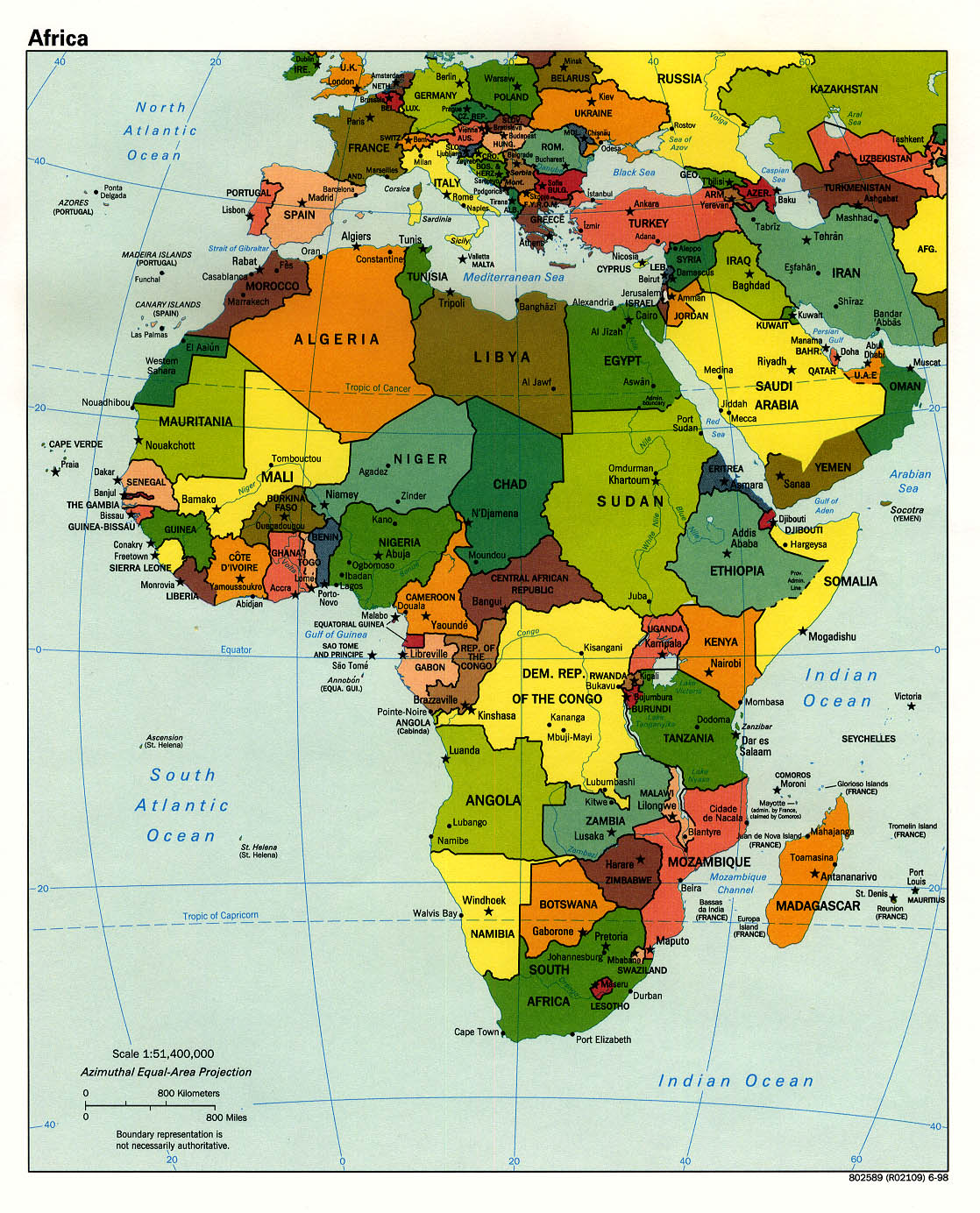
Pre-colonial map of Africa: 1707 by Tobias Lotter

Colonized Africa 1909

Africa today

Nigeria Map

Languages of Nigeria

1.
Describe the setting (time, place, culture) of the novel. How does Achebe present the details of everyday village life in Umuofia, the values and beliefs of the Igbo people, and the importance of ritual, ceremony, social hierarchy, and personal achievement?

2. Describe the narrator, the voice telling us the story of Okonkwo, Umuofia, and the Igbo world. Describe the narrative voice, its point of view, its values and perspectives. Is the narrator an insider? outsider? if so, to what and to whom? Use text to support your ideas.

Tuesday, September 29, 2009

Things Fall Apart Day 1

The Second Coming

Ibo Culture

Style of the novel

Imagery

Proverbs

Folk Tales

Characters we meet

Questions to consider

1. Describe Unoka, Okonkwo’s father. How does Unoka shape Okonkwo’s character and actions?

2.
Describe Okonkwo. Consider him as an Igbo heroic character: how does he work to achieve greatness as defined by his and culture? Does he have a tragic flaw? Think of Odysseus. Does Okonkwo has a balance of good and bad traits? How do we bring our present day morals and codes to Okonkwo's character?

Friday, September 18, 2009

A Small Place 1-19

Inquiry : Tell me about a time when you were a tourist. What might your story be missing? Quick history of Antigua . And who is this Jamai...