Free write: You have been asked to write Elie Weisel a letter. What questions would you ask him about the book so far or about the violence and hatred he describes. What would you want him to know about you as a person? Remember, a letter begins with a greeting (Dear, To whom it may concern) and ends with a formal closing (sincerely, yours truly, all the best). We'll spend about 15 minutes writing.
A closer look
p. 29 — final moment with mother. How does Weisel express regret in this moment? How does this moment redefine his relationship with his father? How does this moment redefine Elie's identity?
p. 33 — walking to possible death. What does this moment reveal about Elie's self? What does it tell the reader about his beliefs?
p. 65 — That night, the soup tasted of corpses. What has changed in Elie? How does he see himself in society differently now?
Photos & text
"Men to the left. Women to the right," (29). Interior gas chamber.
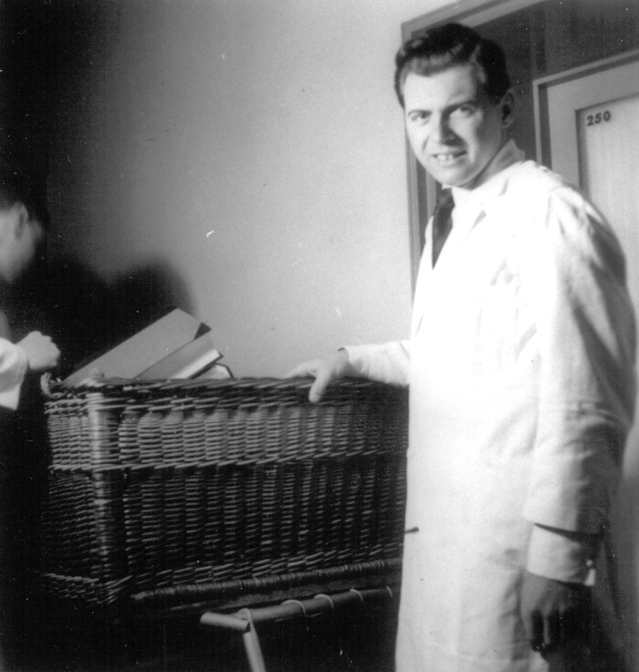
"My heart was about to burst. There. I was face-to-face with the Angel of Death," (34). Dr. Mengele was stationed in Auschwitz in early 1941. He judged the fate of many people, but his real passion was for twins. He felt her could learn about genetics if he studied (tortured) one twin. He documented much of his work with photographs.
"He had been forced to place his own father's body into the furnace," (35). corpses. This is a disturbing image.
"Our clothes were to be thrown on the floor at the back of the barrack. There was a pile there already. New suits, old ones, torn overcoats, rags," (35)
"Their clippers tore out our hair, shaved every hair on our bodies," (35).
"Work or crematorium—the choice is yours," (39). Ovens.
Rings, silverware taken by the nazis. Women's barracks, empty barracks, bunks at liberation.
"At six o-clock in the afternoon: roll call," (43).
"As we were passing through some of the villages, many Germans watched us, showing no surprise. No doubt they have seen quite a few of these processions ... " (46). Truck full. This is a disturbing image.
"We struck up a conversation with our neighbors, the musicians. Almost all of them were Jews. Juliek, a Pole with eyeglasses and a cynical smile in a pale face, " (49).
"My father had never served in the military and could not march in step. But here, whenever we moved from one place to another, it was in step," (55).
"Ten thousand caps came off at once," (61).
"Then came the march past the victims," (64). The latter picture is disturbing.




No comments:
Post a Comment