Friday, November 27, 2009

Letter Writing Fun!

Letter Writing Assignment

Let's get into character

Letter examples 1, Farewell, last letter, looting Crystal Night, Saving Jews,

Date

In English Class

Homework

Tues. 12/1

Introduce letter writing project

Read some letters

Character Bio


Begin writing letter. It is DUE at the end of Thursday's class.

Thurs. 12/3

COMPUTER LAB


Letter due at end of class

Create a list of 12-15 major characters we've encountered this semester. Be sure to note what story/novel each character was in and why each character is important.

Mon. 12/7

Film: Life is Beautiful

Create a list of 8-10 major themes we've encountered this semester. Be sure each theme is linked to a story/novel.

Wed. 12/9

Film: Life is Beautiful

Begin prep for final exams

Tuesday, November 24, 2009

Night ends

Free write
Identity. Memory. Witness. Messenger. What do these words mean in the context of Night?

Discussion
1. How do the prisoners struggle to maintain their identity under extraordinary conditions?
2. Eliezer recalls the story of three fathers and three sons. Why? How do these stories affect the way he reacts to his father's illness? To his father's death?
3. Why is it important to Eliezer to remember? To tell you his story? Look at the last two lines.

Bearing Witness NYT

Wins Nobel NYT

'Has Germany ever asked us to forgive? To my knowledge, no such plea was ever made. With whom am I to speak about forgiveness? I, who don't believe in collective guilt. Who am I to believe in collective innocence?' Elie Wiesel; chairman of the United States Holocaust Memorial Council, during his first vist to Germany since his release almost 40 years ago from the Buchenwald concentration camp. January 26, 1986.

Sunday, November 22, 2009

Night marches on

Free-write: The committee that created the United States Holocaust Memorial Museum in Washington, D.C. is erecting two new monuments, and you have been asked to select one quotation from Night for the monument that represents Auschwitz-Birkenau. What quotation would you select? I ask you not only to identify the quotation you would use, but also explain why you chose it.

General questions:
1. The reader experiences Wiesel's anger not at the Germans but at his faith. What does this anger suggest about the depths of his faith? How have the experiences at Auschwitz affect his faith?
2. How has Wiesel's relationship with his father changed? What has each come to represent to the other?
3. The choiceless choice: do Wiesel and his father make the right choice in leaving the infirmary? How does the decision help us understand why many survivors attribute their survival to luck? Wiesel clearly knows the fate of the infirmary patients. Would you want to know this kind of information after making such a difficult decision?
4. Biblical references: Job, Last judgment, Adam & Eve, Noah, Sodom.

How the memoir is crafted:
1. Why do you think Elie Wiesel tells this story in the first person perspective? If Night were written in the third person, would it be more or less believable.
2. Night is written in short, simple sentences. Critics call this kind of writing "controlled." Every word has been carefully chosen for precise meaning. How does this style of writing compare with Wiesel's experiences in the concentration camps?

Videos:
1. Elie Wiesel at Buchenwald, 6/09
2. Twins story of survival
3. Auschwitz Album
4. Young girl's story of survival

Wednesday, November 18, 2009

Night continues

Free write: You have been asked to write Elie Weisel a letter. What questions would you ask him about the book so far or about the violence and hatred he describes. What would you want him to know about you as a person? Remember, a letter begins with a greeting (Dear, To whom it may concern) and ends with a formal closing (sincerely, yours truly, all the best). We'll spend about 15 minutes writing.

A closer look
p. 29 — final moment with mother. How does Weisel express regret in this moment? How does this moment redefine his relationship with his father? How does this moment redefine Elie's identity?

p. 33 — walking to possible death. What does this moment reveal about Elie's self? What does it tell the reader about his beliefs?

p. 65 — That night, the soup tasted of corpses. What has changed in Elie? How does he see himself in society differently now?

Photos & text
"Men to the left. Women to the right," (29). Interior gas chamber.

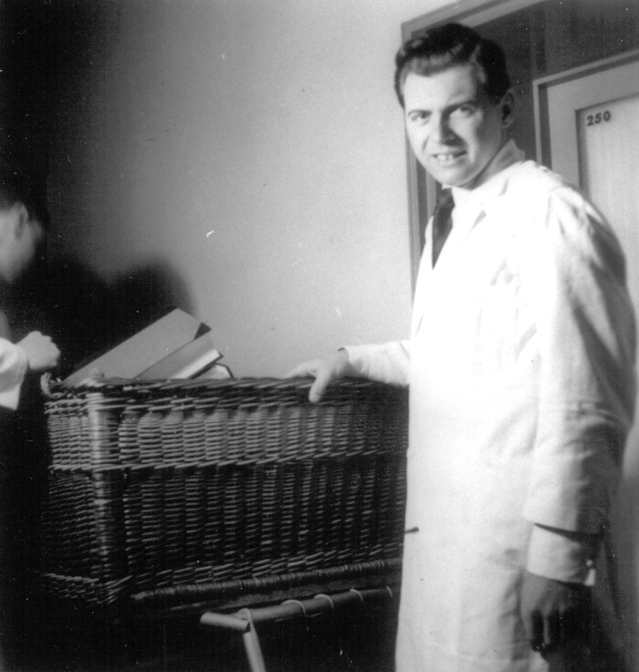
"My heart was about to burst. There. I was face-to-face with the Angel of Death," (34). Dr. Mengele was stationed in Auschwitz in early 1941. He judged the fate of many people, but his real passion was for twins. He felt her could learn about genetics if he studied (tortured) one twin. He documented much of his work with photographs.

"He had been forced to place his own father's body into the furnace," (35). corpses. This is a disturbing image.

"Our clothes were to be thrown on the floor at the back of the barrack. There was a pile there already. New suits, old ones, torn overcoats, rags," (35)

"Their clippers tore out our hair, shaved every hair on our bodies," (35).

"Work or crematorium—the choice is yours," (39). Ovens.

Rings, silverware taken by the nazis. Women's barracks, empty barracks, bunks at liberation.

"At six o-clock in the afternoon: roll call," (43).

"As we were passing through some of the villages, many Germans watched us, showing no surprise. No doubt they have seen quite a few of these processions ... " (46). Truck full. This is a disturbing image.

"We struck up a conversation with our neighbors, the musicians. Almost all of them were Jews. Juliek, a Pole with eyeglasses and a cynical smile in a pale face, " (49).

"My father had never served in the military and could not march in step. But here, whenever we moved from one place to another, it was in step," (55).

"Ten thousand caps came off at once," (61).

"Then came the march past the victims," (64). The latter picture is disturbing.

Tuesday, November 17, 2009

Night falls

Identity. Memory. Witness. Messenger.
  • These are the key concepts to keep in mind while reading Night.

Free write: You are either 1. a member of Eliezer's family (mom, dad, sisters), 2. Moishe the Beadle, 3. other Jews in Sighet, or 4. the Germans. How would you describe Eliezer?

What shapes Eliezer's identity (find specific passages for each question)
1. How does Eliezer identify himself?
2. What role does Moishe the Beadle play in his life?
3. How important is religion to the way Eliezer defines his life?

Knowing, madness and belief
1. Compare Moishe the Beadle to Madame Schachter. Are they mad? prophets? witnesses?

How the story is told
1. Why do you think Elie Wiesel begins Night with the story of Moishe the Beadle?
2. What lessons does the narrator seem to learn from Moishe's experience in telling his own story?
3. What do you think Elie Wiesel tells this story in the first person perspective? If Night were written in the third person, would it be more or less believable.
4. The word night is a key word in this first section (the entire book, as well). What does the word mean in the first few chapters?

Photos


Early discrimination against Jews: no streetcar use. Pic 2. Pic 3. Pic 4. Pic 5.

Deportation of Jews. Pic 2. Pic 3. Pic 4Kristallnacht.

Life in the ghetto. Ghettos across Europe.

German Soldiers Guarding Jews

What Moishe saw. This image is disturbing.

Firing squads that Moishe mentioned. This image is disturbing.

Arriving at Auschwitz-Birkenau. Entrance gate.

Auschwitz child photo

Auschwitz-Birkenau aerial photo

Friday, November 13, 2009

Night — The Beginning

What is the relationship between our stories and our identity?
To what extent are we all witnesses to history and messengers to humanity?


"Never shall I forget that night, the first night in the camp, which has turned my life into one long night, seven times cursed and seven times sealed. Never shall I forget that smoke. Never shall I forget the little faces of the children, whose bodies I saw turned into wreaths of smoke beneath a silent blue sky. Never shall I forget those flames which consumed my faith forever…Never shall I forget these things, even if I am condemned to live as long as God Himself. Never." — Elie Wiesel, Night


The word Holocaust is taken from the greek words holos (whole) and kaustos (burnt). It's also known as The Shoah (a Hebrew word that means catastrophe, calamity, destruction). THe term Holocaust wasn't used until the 1950s.

Approximately 6 million European Jews were exterminated under the Nazi regime led by Adolph Hitler. Millions of other people were systematically killed by the Nazis as well (Catholics, homosexuals, disabled people, Polish, Romanians, and other political and religious opponents), so many believe the total number of lives lost is between 11-17 million. The genocide was carried out in systematic waves beginning in the early 1930s.

Brief Holocaust timeline

Voices of those who escaped


Elie Weisel — This I Believe

Who is a Jew?

What does it mean to bear witness? What we are about to read is Weisel's attempt to expose what happened to him and others, his attempt to make the event live on beyond his lifetime.

Memoir vs autobiography

Tuesday, November 3, 2009

Monday, November 2, 2009

Foreshadowing Homework— post here

Share your brilliance with the class.

TFA Day 10: It's all apart

Enoch & Isaac

Biblical language

1. The District Commissioner decides that "The story of this man who had killed a messenger and hanged himself would make interesting reading" if not for a whole chapter, at least for a "reasonable paragraph" (208-209). How do you think the District Commissioner would write Okonkwo's story in this paragraph? In contrast, Achebe has made Okonkwo's story the subject of a whole novel. Why?

2. Looking at the final chapter of the text, notice how Achebe gives an ironic portrayal of the DC's derogatory view of Africa and African people. Why? What is the significance of the title of the DC's book?

3. Major themes or messages of the text?

A Small Place 1-19

Inquiry : Tell me about a time when you were a tourist. What might your story be missing? Quick history of Antigua . And who is this Jamai...